

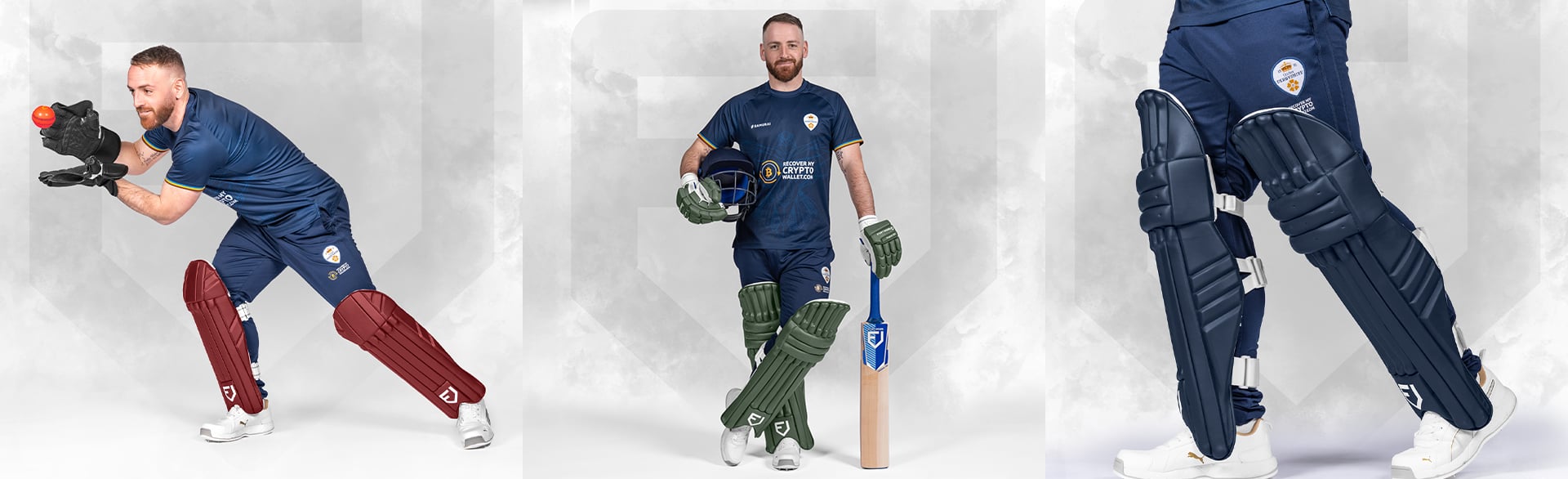
Cricket Pads Size & Buying Guide
Choose the right cricket pads for comfort & protection
If you are looking to buy cricket pads, but are confused by all of the options and sizes available; you are definitely not alone. With so many different designs, and sizes available, buying the right pair can be difficult, especially if you are new to the sport and you are not sure what to look for.
As a vital part of a cricket player's equipment, cricket pads are designed to protect the body from the impact of the cricket ball. Without the pads, the game would result in many injuries; but thanks to development in modern material science, players can protect all vulnerable parts of the body, whilst remaining comfortable and mobile.
With research illustrating that the force exerted by a delivery from a fast bowler can exceed over a ton, the pads must have shock-absorbing properties, whilst remaining as lightweight as possible so that batters can make runs and wicket keepers can dive and step quickly in all directions.
Cricket pads also need to fit correctly in order to mitigate the risk of injury and to allow the batter or wicket keeping to perform to the best of his/her ability. In this guide, we will explain how to buy the correct size(s) of cricket pads, and examine the properties of high-quality pads and the features to look out for when buying them.
Please note, we have separate guides for cricket helmets and cricket gloves. This guide focuses on lower body cricket pads.
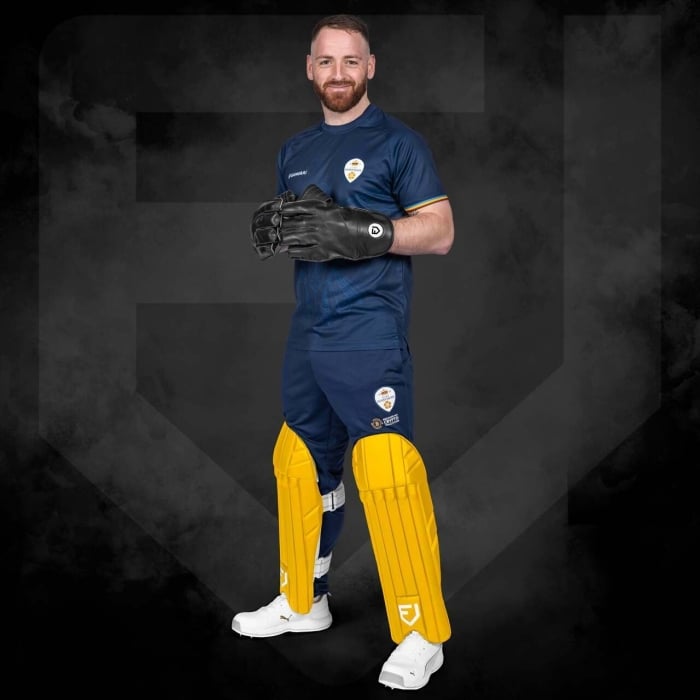
Cricket Pads Size Guide
Cricket pads that fit correctly will provide the optimal level of protection and comfort. High-quality pads that are the correct size can also have a positive psychological impact on the cricketer; who will feel confident that they can play and focus on their game, without having to worry about the impact of a cricket ball that’s delivered by a fast bowler, or unpredictable spin bowler.
To ensure that you purchase cricket pads that are the perfect size, we have compiled a simple to follow size chart and size table.
-
Measure with a tape measure from the centre of your kneecap to the top of your foot
-
Compare your measurement to the size table below to find your size
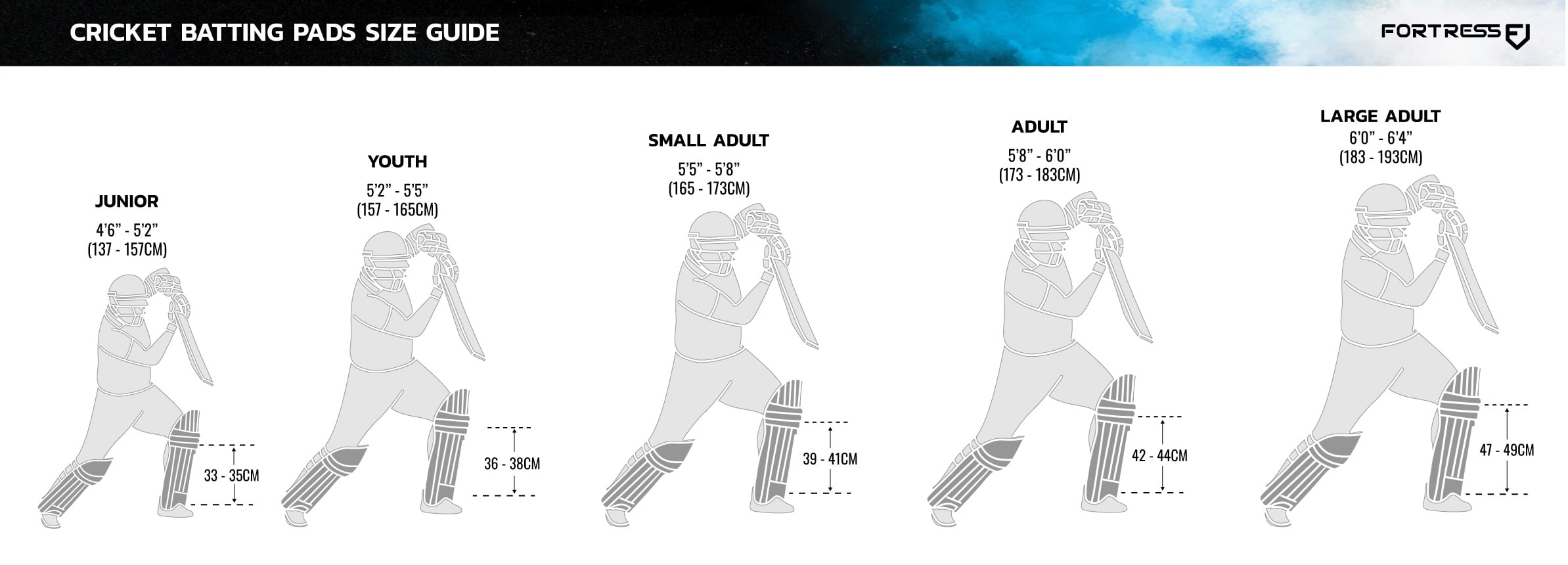
| Batting Pads Size Guide | ||
|---|---|---|
| Size | Player Height | Measurement |
| Junior | 137 - 157cm (4'6'' - 5'2'') | 33-35cm (13.0-13.8") |
| Youth | 157 - 165cm (5’2'' - 5'5'') | 36-38cm (14.2-15.0") |
| Small Adult | 165 - 173cm (5'5'' - 5'8'') | 39-41cm (15.4-16.1") |
| Adult | 173 - 183cm (5'8'' - 6'0'') | 42-44cm (16.5-17.3") |
| Large Adult | 183 - 193cm (6’0”-6’4”) | 47-49cm (18.5-19.3") |
Wicket keeping pads and batting pads use the same method for sizing/measuring what size you need. Contact the manufacturer if you have any doubts about the measuring technique, as it can sometimes differ depending on the brand.
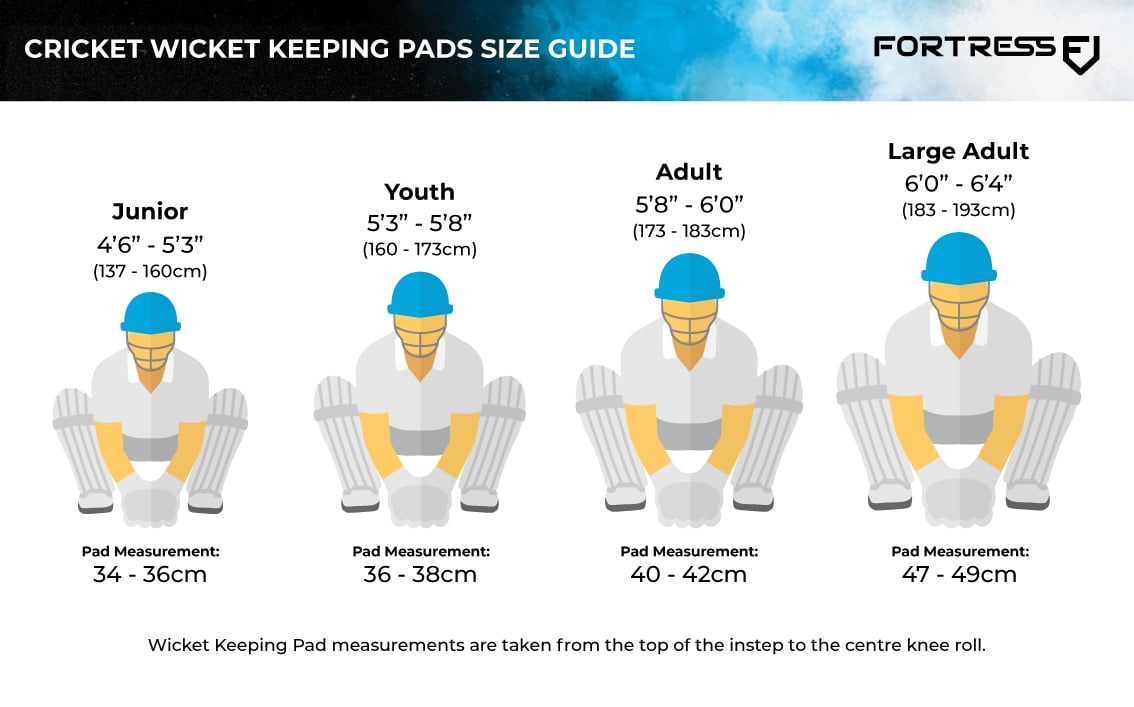
TYPES OF CRICKET PADS
Wicket Keeping Pads
wicket keeping pads provide protection to the legs of the wicket keeping, without restricting movement. With the wicket keeper positioned further from the bowler than the batter, the pads do not have to provide the same level of protection and shock absorption, with emphasis put on freedom of movement in all directions.
What to look for
• Lightweight design for quick movement. Wicket keepers should be able to move laterally, squat and dive whilst wearing the pads.
• Mobility - the pads should bend relatively easily, so that wicket keepers can adopt their iconic squatted position as they wait for the delivery.
• Multi-layered foam - whilst the wicket keeping pads should be lightweight, they should be multi-layered to provide several ‘levels’ of protection.
• For a firm and comfortable fit, the pads should have adjustable velcro straps. Wicket keeping pads usually have 2 straps.
• With the kneecap being an especially vulnerable spot for wicket keepers, look for extra padding on and just above the knee.
Batting Pads
Batting pads are designed to protect the legs and to a certain extent the feet from fast deliveries, without impeding the linear movement the batter makes when running to and from wickets.
What to look for
• Padding - Ensure that the pads contain HD foam, with additional padding on the knee.
• Lightweight, shock absorbing materials - Look for layers of high and low density foam, and other shock absorbing materials such as plastic fibres.
• Knee roll - ensure the batting pads have a knee roll that is heavily padded relative to the rest of the pad. It should provide protection & mobility.
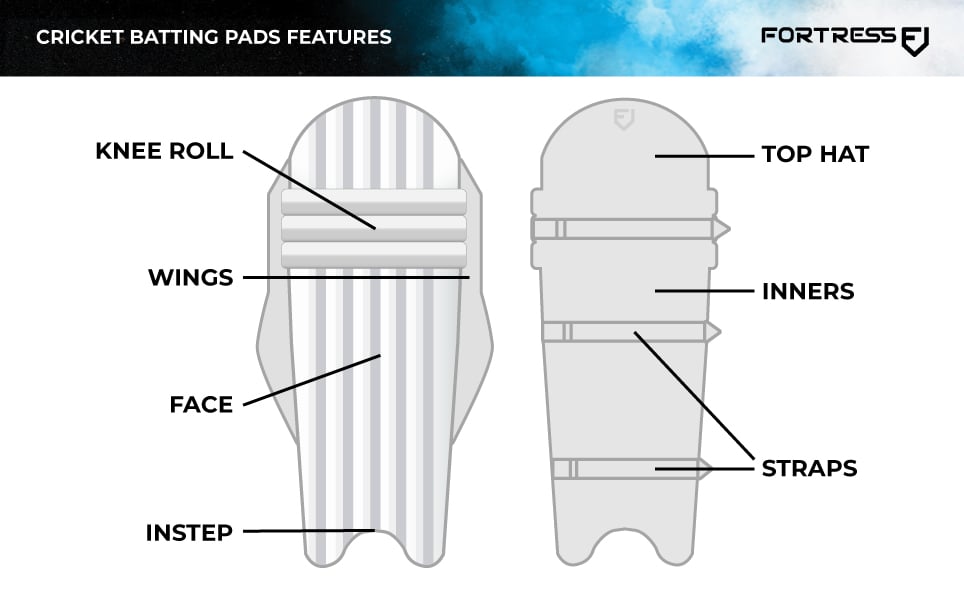
• Side wings - Look for ergonomically designed side wings for deliveries from different angles
• Instep protection - the lower part of the pad should have some additional level of padding, to protect against “yorkers” (when a delivery/bowl lands right on, or just in front of a batter's foot).
OTHER CRICKET PADS
Cricket Thigh Guards
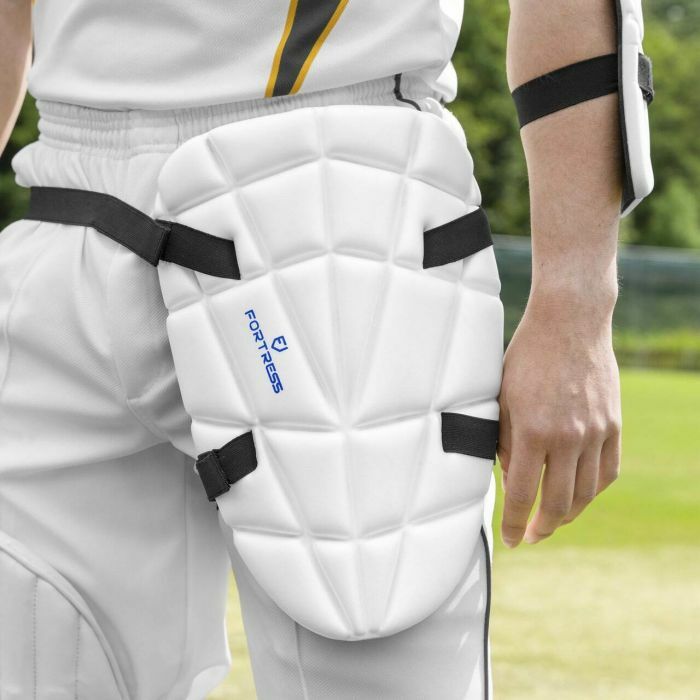
Protecting the front hip, groin and the upper thigh of the batter; cricket thigh guards provide an additional level of safety; making batters feel confident and focused; especially if they’ve previously been hurt or injured in the upper thigh area.
What to look for
• High density EVA foam
• Lightweight design
• Velcro straps
| Cricket Thigh Pad Size Guide | ||
|---|---|---|
| Size | Dimensions L x W | Dimensions L x W |
| Junior | 30.5 x 21.6 cm | 12 x 8.5 in |
| Youth | 32 x 23.6 cm | 12.6 x 9.3 in |
| Adult | 34.9 x 25.4 cm | 13.75 x 10 in |
Cricket Arm Guards
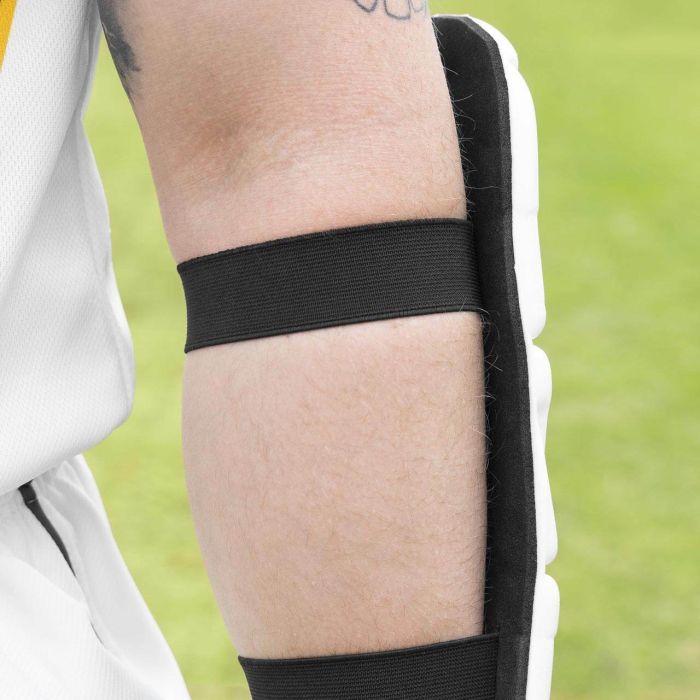
Prevent lower arm injuries with a high-quality cricket arm guard. The guard protects against high-bounce deliveries
What to look for
• Elasticated straps
• Premium lightweight foam
• Moisture wicking material
| Cricket Arm Guard Size Guide | ||
|---|---|---|
| Size | Dimensions L x W | Dimensions L x W |
| Youth | 27.4 x 13.5cm | 10.8 x 5.3in |
| Adult | 28.6 x 13.5cm | 11.3 x 5.3in |
Lower Body Guard
Prevent severe bruising and fractures around both upper thighs and hips, with a lower body guard. A high-quality lower body guard will dissipate much of the force of a cricket ball, reducing the chances of injury. Worn by batters and wicket-keepers, the guards are comfortable, yet significantly mitigate the chances of upper thigh injuries.
What to look for
• Left and right-handed options
• High-quality materials like premium cotton
• Contoured design for snug fit
| Cricket Lower Body Guards | |||
|---|---|---|---|
| Size | Waist | Thigh | Suitable for |
| Youth | 24" - 28" | 16" - 20" | Ages 11-15 |
| Adult | 28" - 34" | 20" - 24" | Ages 16+ |

Cricket Pad Materials - An Evolution
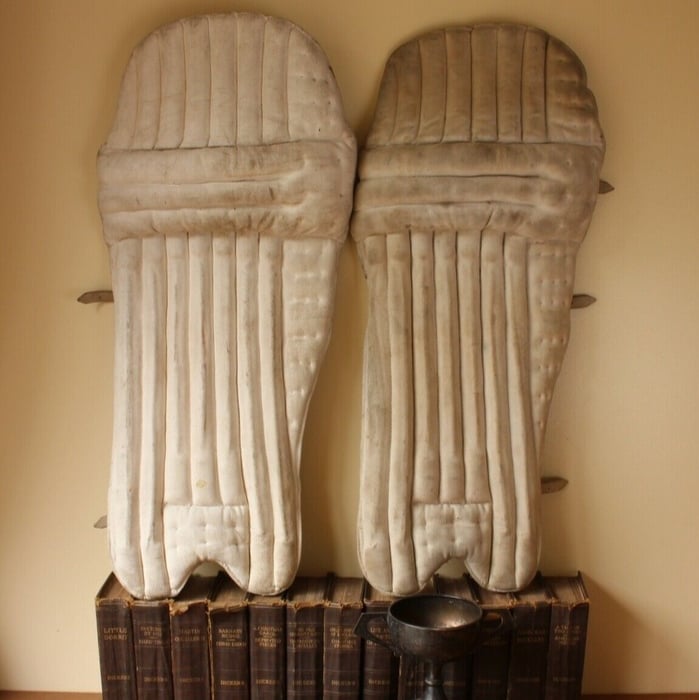
Traditionally, cricket pads were made of leather, cotton wadding and cane. However, due to the limitations in regards to weight and flexibility, most modern cricket pads are made of synthetic materials.
Since their original inception and introduction in the 1700s, cricket pads have undergone a significant evolution to enhance comfort, durability and performance.
Classic Cricket Pad Materials
Traditional cricket pad materials provided a high amount of protection and impact resistance, but they were relatively heavy and uncomfortable. In addition, the durability was poor in comparison to modern cricket pads and traditional materials tended to retain more moisture from sweat and washing for longer periods.
Leather
Largely replaced by modern materials, leather used to be the gold standard of materials. A durable and long lasting material, the main issue with leather is the weight.
Advantages
• Durable
• Molds to the legs over time
Disadvantages
• Heavier than modern alternatives
• Limited mobility & flexibility
• Degrades with moisture
• Can get hot and uncomfortable
Cotton Wadding
Cotton-wadding was traditionally used in cricket pads as a shock absorbing material. Prone to absorbing water, and becoming heavy and uncomfortable.
Advantages
• Shock absorbing - effective at reducing the impact of a cricket ball
Disadvantages
• Can become heavy from sweat and rain water absorption
• Can be more expensive than synthetic alternatives
Cane
Another one of the main materials used in early cricket pads was cane. Split cane, usually from bamboo cane, was used to create and reinforce the shape of the pads, being used as a frame to keep the pads for flopping and moving around when in use.
Advantages
• Provides strength & a frame for pads
• Provides an additional level & type of cushioning
Disadvantages
• Heavier than modern alternatives
• Rigidity - relatively stiff so more difficult to move and run in
• Safety - bamboo cane can splinter
Modern Materials
HD Foam
Foam provides a high-level of protection and shock absorption. Compressing on impact, high quality foam has “viscoelastic” properties, allowing it to deform and become more compact on impact or under load, and dissipate forces in all direction; before returning to its original size and shape. The foam used in our cricket pads also has an open-cell structure, meaning that it can allow air to escape, making it compress more and act as a more effective shock absorbing material.
HD foam is also relatively light due to the low density, and is soft, moldable, providing a snug and comfortable fit.
Advantages
• Lightweight
• High and effective level of shock absorption
• Flexible yet durable
Disadvantages
• Some players prefer the look & feel of traditional materials
PU Leather
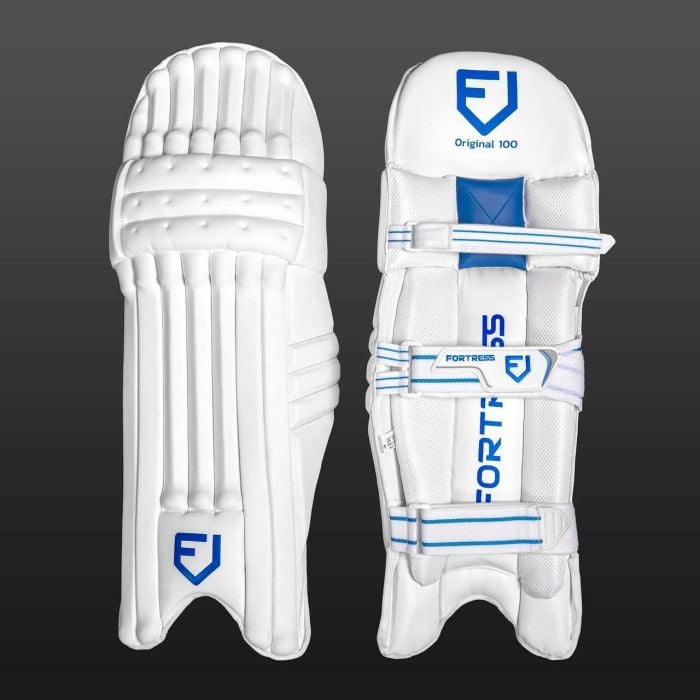
Lighter than traditional leather, PU leather allows batters to run faster than traditional leather which is heavier and less flexible. PU leather is also water resistant and extremely durable, as well as being cost effective and recyclable.
Advantages
• PU leather is lighter than natural leather
• High-quality PU leather is durable and does not rot or degrade
• PU leather can be recycled
• Low maintenance and easy to clean
• Flexible but strong
• Water resistant
• Cost effective
• Maintains shape over time, preventing sagging
Disadvantages
• Not biodegradable like real leather

Fibreglass
Sometimes used in small quantities in cricket pads to increase the stiffness of the pads and provide additional rigidity. Lightweight and strong, it can however be too rigid and effect the comfort of the pads
Advantages
• Strength provides rigidity and shape to the cricket pads
• Lightweight
Disadvantages
• Can make pads uncomfortable
Hybrid Materials
Optimizing with Hybrid Materials FORTRESS combines modern and traditional cricket pad materials to create hybrid materials which offer the best qualities of each individual material. Cushioning provided by a blend of HD foam, cane and cashmilon cottons, provides a flexible structure that softens and dissipates the force of a cricket ball.
Strategically placed low density foam and mesh linings proved enhanced protection and air circulation for added comfort and safety.
Coloured Cricket Pads
Used in limited-over cricket matches and tournaments, such as T20 and One Day Internationals, coloured pads are designed to match the vibrant kits that players tend to wear. Thought to be more appealing to spectators, coloured kit and pads help to differentiate the team and give them a consistent look that is distinctively their own.
Part of a modernization and branding effort, to make cricket more exciting to potential new fans, coloured kits can also provide more opportunities for sponsors to appear on the uniform.
Cricket pads may be dyed to the same colour as the kit, or they may use colored pad covers to produce the same effect.
If you are an amateur player with a limited budget, cricket pad covers are a great solution if your team plays with a coloured kit, or in one-day style tournaments.
Cricket Pad FAQs
How do you clean cricket pads?
Always check the label and the manufacturer’s instructions before washing your pads. This is a general guide only.
Equipment / Cleaning Supplies
-
Soft cloth or sponge
-
Mild soap - no harsh soaps or anything with bleach
-
Bowl of lukewarm water
-
Soft bristle brush
-
towel
You’ll also need a well ventilated drying area out of direct light and not directly next to heat sources like radiators.
-
Remove excess dirt
Remove loose direct from the surface of the pads with a soft brush. Make sure to brush the grooves and crevices on the face of the pads.
-
Wipe down Pad Exterior with Damp Cloth
Add 3 or 4 drops of mild soap to a bowl of lukewarm water.
Dampen a clean cloth or sponge with the water from the bowl.
Wipe the surface of the pads including front, back and sides
Wipe off any soapy residue with a clean cloth or sponge.
-
Scrub the straps & inner padding
To remove any sweat, use a soft brush and lukewarm water with a few drops of mild soap to gently wipe & scrub this area.
A small amount of baking soda can be used to remove stubborn stains.
-
Dry The Pads
Air-dry the pads in a well ventilated area, that is out of direct light and not next to any sources of heat like a fire or radiator.
Avoid placing the pads in direct sunlight and avoid excessive heat.
Never tumble dry or use a hair dryer to dry your pads.
-
Store the Pads Correctly
Store the pads in a cool, dry, well ventilated place, away from moisture and direct light and heat.
Do not wrap them in any airtight materials like a plastic container or bag as the moisture will become trapped.
How do you run with cricket pads on?
Before a competitive match, be sure to practice running with your pads on, especially if you have brand new cricket pads.
To be able to run at optimal speed with the correct technique, batters will first need to make sure that they have high-quality pads that fit correctly. For example, if the pads are too long, the bottom edge of the pads could cause you to trip.
Adjust the straps to make sure they are snug and won’t move around when running.
Requiring a slightly different stride than running without pads, you should aim to lift your knees a bit higher than normal, making shorter and quicker steps at the start of the run to aid acceleration.
You can improve your speed between the wickets by drilling short sprints in training with your pads on. You can also look to improve explosive lower body and hip power with plyometrics and Olympic lifts.
Batting Pads vs Wicket Keeping Pads -
What’s the difference?
Designed for different purposes and positions, batting and wicket keeping pads may look similar, but there are some key differences.
Batting pads are primarily designed to protect the batter against high-paced deliveries which can reach speeds of up to 100mph at the professional level. For this reason, batting pads will tend to be reinforced, thicker and/or have more layers of protection than wicket keeping pads.
Wicket keepers tend to be subjected to deflections at lower speeds, and as such, they don't require the same level of protection. Instead, wicket keeping pads must allow for movement in all directions, with protection built-in as a secondary concern.
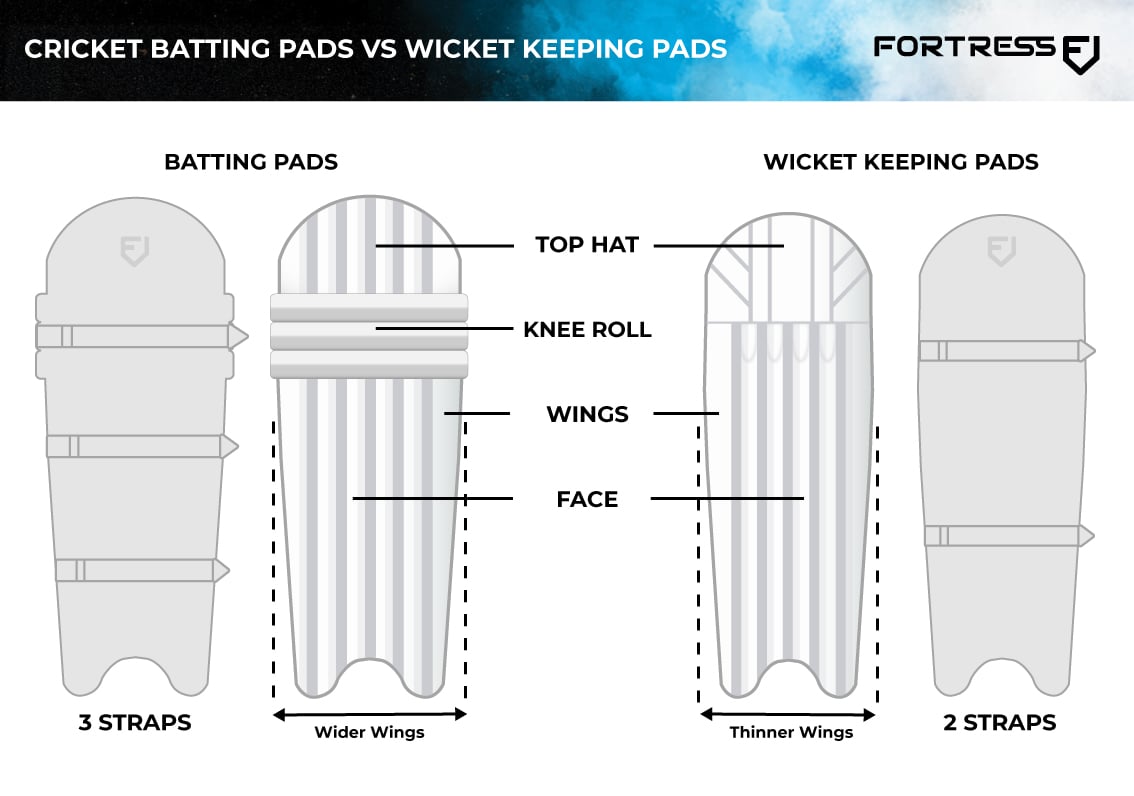
Batting pads will tend to have extra padding on the knee area - creating a “knee roll” that absorbs the impact of a cricket ball more effectively in this vulnerable area. Cricket batting ads will also feature bigger side wings for inswinging deliveries and they will have a more rigid, heavier structure.
Wicket keeping pads are shorter and thinner than batting pads. Built for protection but also mobility, wicket keeping pads are lighter and have minimal or no side wings.
Final Thoughts - Choosing The Right Cricket Pads for Safety & Comfort
Cricket pads are important for reducing the risk of serious injury during training and matches. With proper care and maintenance, cricket batting and wicket keeping pads will last for many seasons. Be sure to clean and store your pads correctly, and buy the correct size for maximum comfort and performance.
Look out for high-quality cricket pads that use high-performance materials including PU leather and HD foam. At Net World Sports we also sell cricket bags, cricket bats and cricket whites.
Be sure to check out our other guides, looking at the finer details of cricket helmets, cricket whites and even cricket field dimensions.